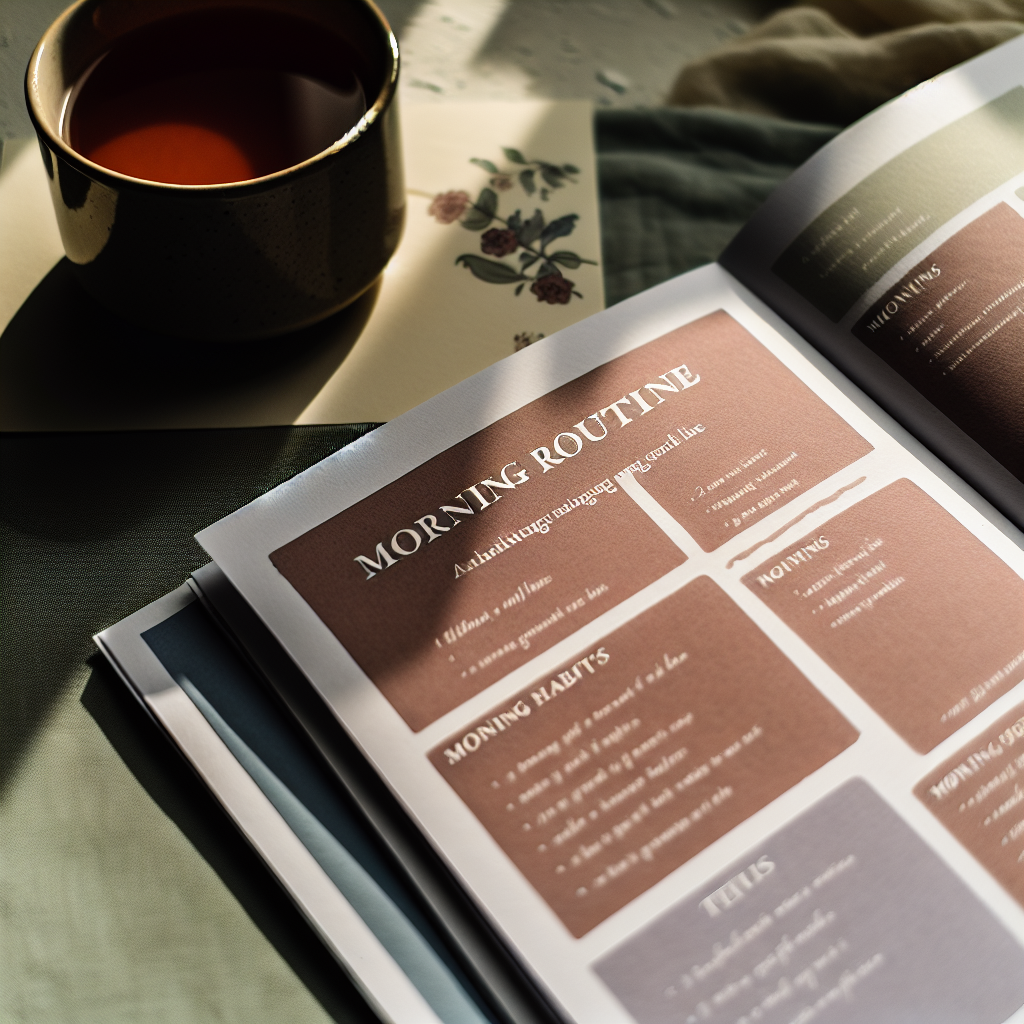
Why Mornings Matter
The first hour of your day sets the tone for everything that follows. When you start by scrolling through notifications, you're letting others dictate your mental state and priorities. An analog morning routine returns control to you.
Research shows that checking your phone within the first hour increases stress hormones by up to 50%. Your brain shifts into reactive mode instead of creative, proactive mode. The solution? Keep screens out of your morning entirely.
The Analog Morning Routine
-
Wake Naturally (6:00-6:30 AM)
Use an analog alarm clock, not your phone. Place it across the room so you must get up to turn it off. This prevents the temptation to immediately check notifications.
-
Hydrate First (6:30-6:35 AM)
Keep a glass of water on your nightstand. Drink it before anything else—even before coffee. This simple act signals to your body that the day has begun.
-
Movement (6:35-6:50 AM)
Gentle stretching, yoga, or a brief walk. No headphones, no podcast. Just you and your body waking up together. Use this time to notice how you feel.
-
Morning Pages (6:50-7:10 AM)
Write three pages by hand. Stream of consciousness. Don't edit, don't censor. This brain dump clears mental clutter and surfaces what's actually important.
-
Intentional Planning (7:10-7:20 AM)
Review your daily paper list. Identify your top 3 priorities. Assign them to time blocks. This creates clarity before chaos enters.
-
Mindful Breakfast (7:20-7:40 AM)
Eat without screens. Read a physical book, have a conversation, or simply enjoy the food. This is the last screen-free moment before the digital day begins.

Making It Stick
The hardest part isn't the routine itself—it's protecting it from digital intrusion. Here's how:
Charge Phone Outside Bedroom
Remove the temptation entirely. If your phone isn't beside your bed, you can't check it first thing.
Prepare the Night Before
Lay out your journal, your book, your workout clothes. Make the right choices the easy choices.
Start Small
Don't try to implement the whole routine at once. Begin with just one element—maybe morning pages. Add more as it becomes natural.
Track on Paper
Use a simple check mark system in your journal. Seeing the streak build creates momentum without app-based gamification.
Adapting to Your Life
This is a framework, not a rigid prescription. If you have young children, your morning might look different. Maybe movement happens while they eat breakfast. Maybe morning pages shrink to one page, or shift to evening.
The core principle remains: protect the first hour from digital demands. Everything else is customizable.
Parents might wake 30 minutes earlier for quiet time. Night shift workers might do this routine in the afternoon. Students might condense it before classes. Adapt the method to your life, but preserve the screen-free intention.